
Last Updated:
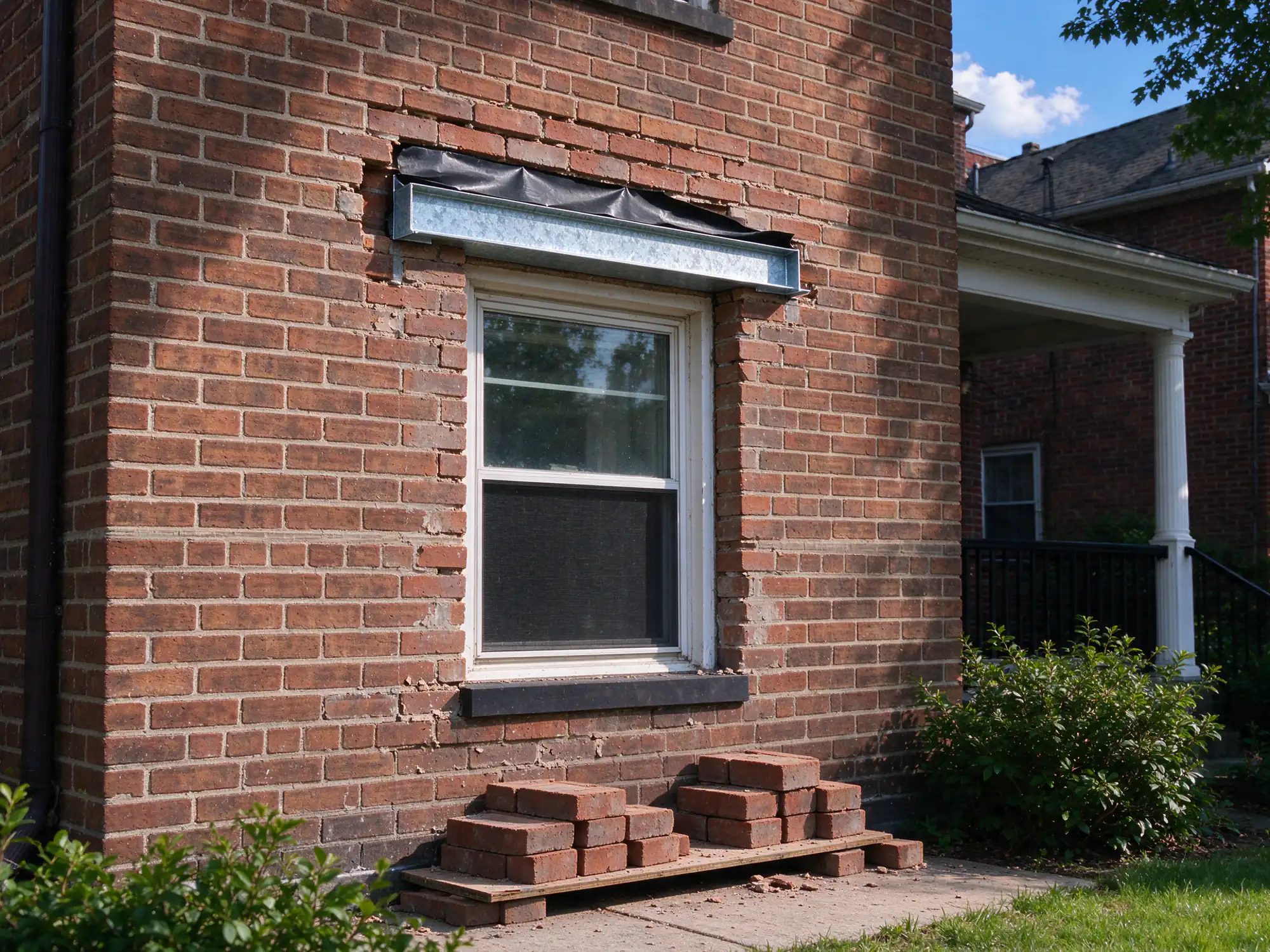
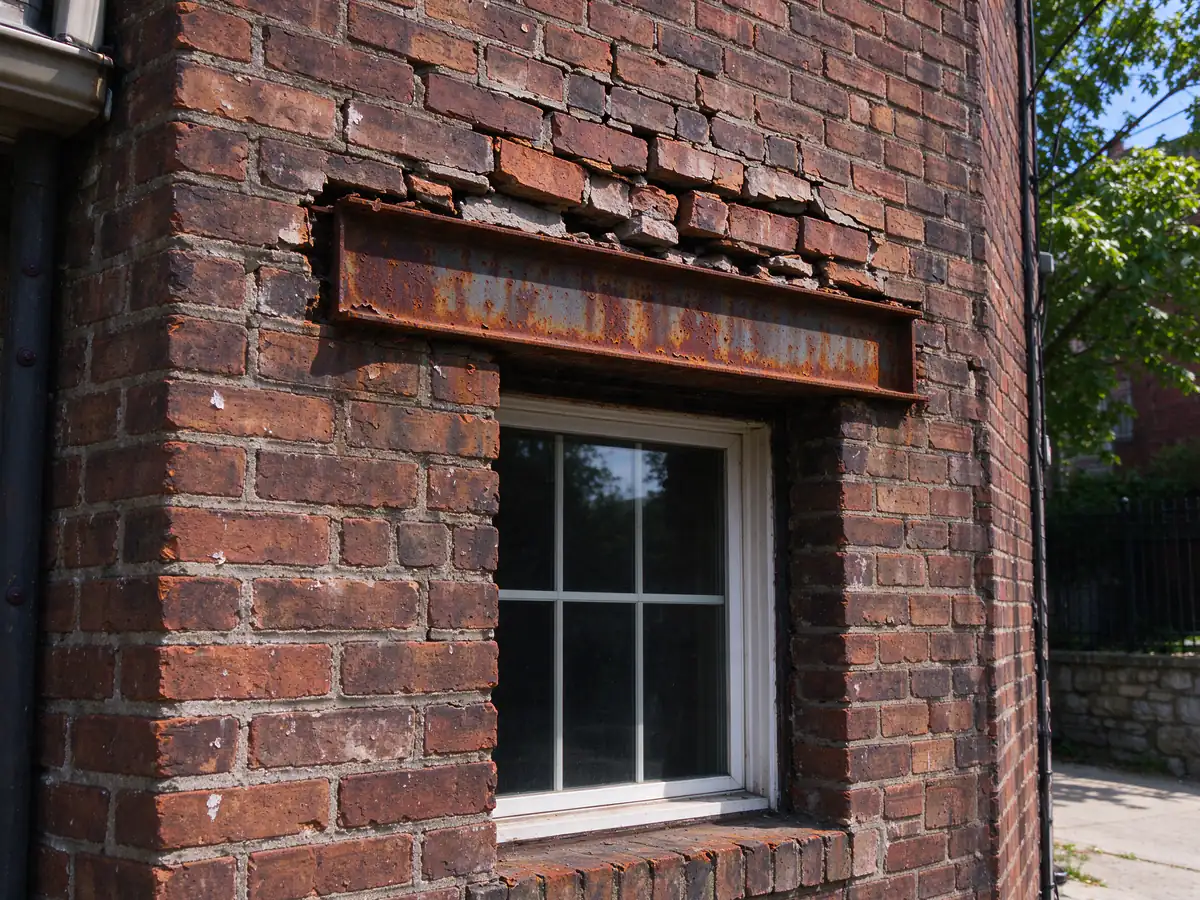
Steel lintel replacement in Newark, NJ deals with the piece of steel you rarely see until it starts to fail: the angle or plate that spans the top of a window, door or garage opening and carries the brick above it. True Course Masonry Newark replaces rusted steel lintels over windows, doors and garage openings across Newark and Essex County, and the work is carried out by licensed and insured contractors. Lintel trouble shows up in the brick before it shows in the steel: a crack stepping up from the corner of a window, a horizontal crack along the course just above the opening, bricks at the ends nudged outward, or a rust-orange stain bleeding down the face. A patch of mortar over those cracks looks tidy for a season, but if the steel inside is still rusting, the cracks come back. The guide to cracks above windows in brick explains the patterns in more depth, and the brick repair page covers damaged brick elsewhere on a wall.
What happens on the first visit
A lintel job is priced from what the steel has done to the wall around it. The first look checks:
- The crack pattern at each opening. Cracks rising from the top corners, a horizontal crack along the lintel line, or bricks lifted at the ends.
- The steel itself, where it shows. Surface rust, flaking layers, lost thickness at the visible edge, and whether the angle has bowed.
- How far the brick has moved. Whether the courses above the opening are still level and in plane, or have lifted, dropped or bulged.
- What kind of opening it is. A steel lintel, a brick arch or a mix, and how wide the span is.
- The wall type. Veneer walls need flashing and weeps over the new lintel; solid walls may have more than one lintel through their thickness.
- Where the water comes from. Open joints above, a leaking gutter or cap, a failed sill or caulk at the frame.
- Access and the interior side. Height, scaffold needs, and interior trim or plaster that may be affected.
Please look from the ground; do not pry at cracked brick over an opening to see how loose it is.
How rust jacks the brick above an opening
Rust takes up much more room than the steel it comes from. As a steel lintel corrodes, it builds up layers of rust scale along its surface, and those layers grow thicker each wet season. Locked inside a brick wall, that growth has nowhere to go except up and out. The lintel’s horizontal leg swells against the brick course sitting on it and lifts it, which opens a crack along that bed joint. The ends of the lintel, buried in the brick at each side of the opening, swell and push the bricks around them, which cracks the masonry at the corners and sends stepped cracks up and out. Over time the steel also loses thickness and can start to sag.
This is why a corroding lintel is a cause, not just a symptom. The movement is driven from inside the wall, and it keeps going as long as the steel stays wet. Each crack it opens lets in more water, which speeds up the rust.
Newark weather keeps that cycle running. NOAA’s 1991 to 2020 normals for Newark Liberty International Airport show about 46.6 inches of precipitation a year and about 76 days with a tenth of an inch or more. Openings sit exactly where water collects: it runs down the face, gets into open joints above the head and, in veneer walls without working flashing, drains straight onto the steel. In older brick, where a lintel was set without flashing or protection, the steel can sit damp for long periods.
How a lintel is replaced
Replacing a lintel is a sequence, and the order is what keeps the wall above safe.
- Support the masonry above. Before any brick comes out, the wall above the opening is supported, with temporary posts and needles or other shoring suited to the wall and the span. On a loadbearing wall, floor or roof framing bearing near the opening is part of that plan.
- Remove brick above the opening. Brick is taken out above the lintel, usually in a stepped triangle, wide enough to free the steel at its ends. Sound bricks are cleaned and set aside for reuse.
- Take out the old steel. The corroded lintel is removed and the bearing areas at each end are cleaned back to sound brick.
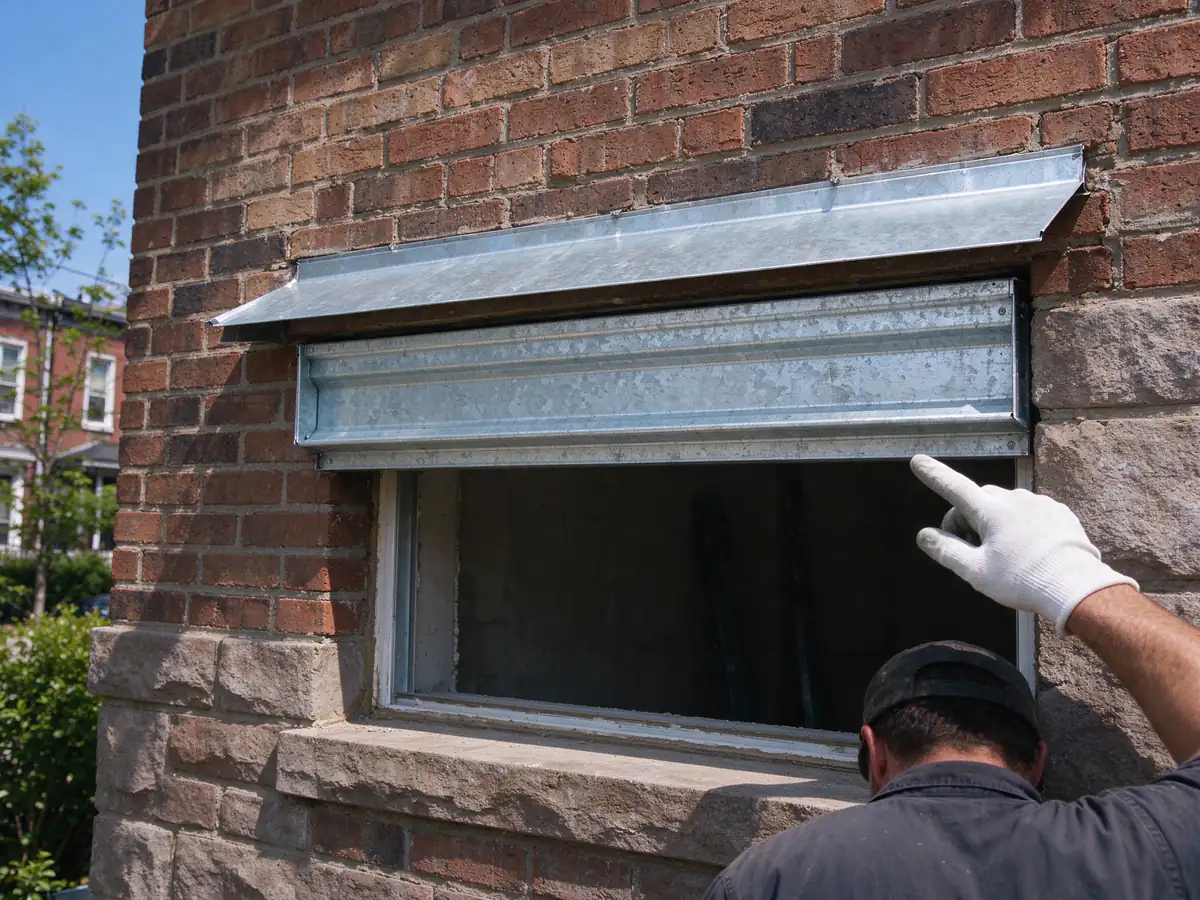
- Set the new lintel. A new steel lintel, sized for the opening and the load and protected against corrosion with galvanizing or a coating, is set with adequate bearing on sound masonry at each end. Where the old steel is sound enough to keep, cleaning and treating it in place is a different, smaller repair.
- Install flashing where it applies. In veneer and cavity walls, flashing goes over the lintel and is turned up at each end into an end dam, so water collected above the opening drains out the face instead of running off the ends into the wall. Open weeps go in the course just above. In solid masonry, the detailing depends on how the wall handles water, and it is decided for that wall rather than copied from veneer practice.
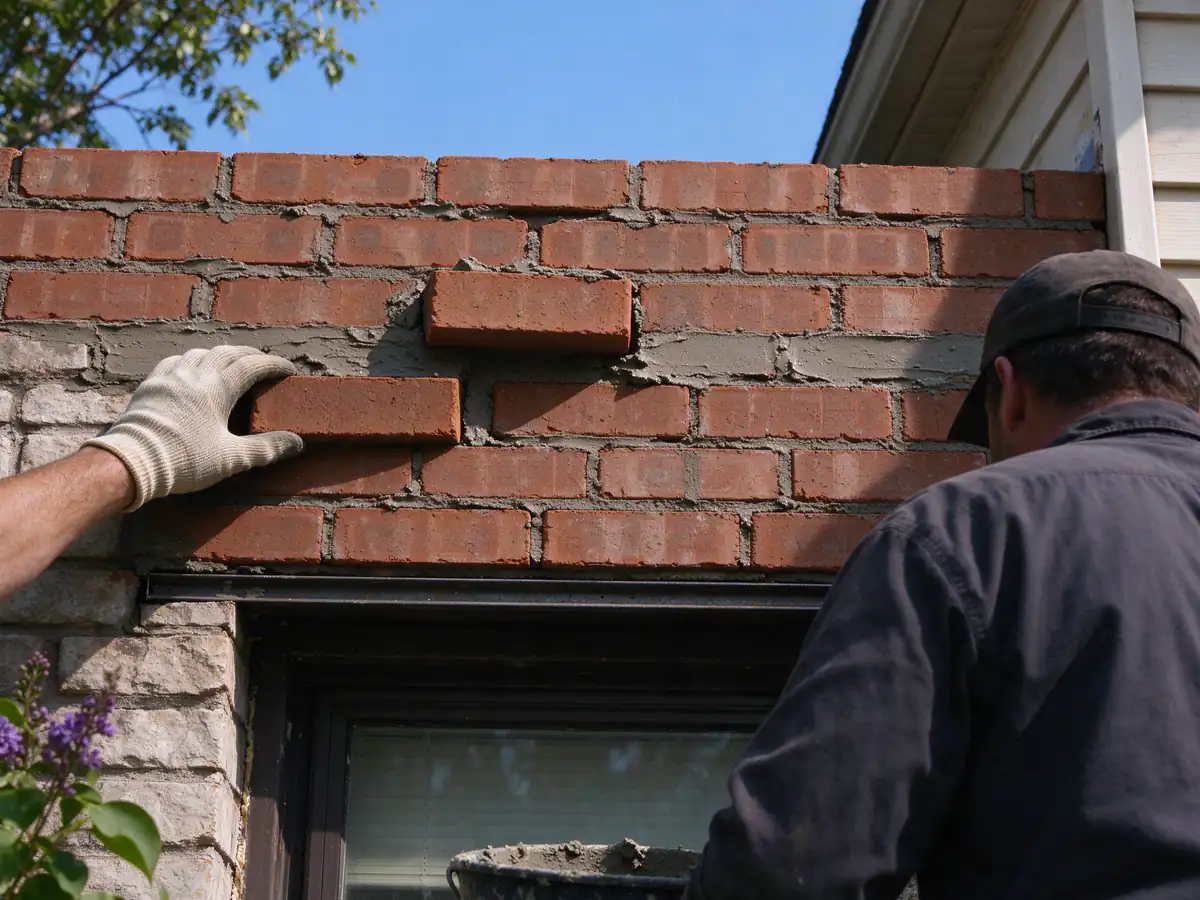
- Rebuild and match. The brick is relaid in its original bond and course lines, using the salvaged units first and matched brick where needed, toothed into the surrounding wall, with mortar matched for color and profile. The guide to matching mortar and brick explains why a trial area helps.
- Cure and finish. The new masonry is protected while it cures, and caulk at the window or door frame is renewed.
Homeowners asking about a bay window lintel often want to know if the brick above will stand out. Reusing the original brick is the main reason it usually does not.
When an engineer is needed
Many window lintels in a sound wall are a straightforward replacement. An engineer should size the steel and plan the support when:
- the opening is wide, such as a garage door, a storefront or a wide bay
- the wall is loadbearing and floor or roof framing bears close to the opening
- the brick above has dropped, bulged or moved well out of line
- several openings are stacked on the same wall, or several lintels have failed
- the opening has an arch, a stone head or a detail that may be carrying load differently
- the condition of the wall around the opening is in doubt
Where the evidence suggests the whole wall is moving, rather than the brick around one opening, the masonry repair page and the guide on when a masonry crack needs an engineer explain how that is sorted out first.
Garage openings
A garage opening is the hardest lintel on most houses. The span is several times wider than a window, so the steel carries a long run of brick, and on a garage under living space it may carry part of a floor too. Rust at the ends of a long lintel can let the steel sag across the middle, which shows as a dip in the brick courses over the door. Replacing it usually means engineered sizing, heavier temporary support, more brick removed and coordination with the garage door, its track and its operator. Garage walls of concrete block rather than brick are covered under block wall repair. Parapets and wall tops that pour water onto the openings below may need attention at the same time; see parapet repair.
Permits and historic fronts
New Jersey’s ordinary maintenance list (N.J.A.C. 5:23-2.7) excludes work that affects structural safety or removes structural supports, and a lintel is a structural support for the brick above it. Under N.J.A.C. 5:23-2.14, repair work needs a permit unless an exception applies, so lintel replacement should be expected to need one; confirm the details with the Newark construction office before work starts. The guide to masonry permits in Newark covers what to ask. On street-facing fronts in a Newark historic district, work around windows and doors can need Landmarks and Historic Preservation Commission review, and brick, stone heads and arches need careful matching; historic masonry restoration covers that work.
What drives the cost of lintel replacement
Published prices for lintel replacement come from a single independent source, so they are not quoted here as a budgeting range. A Newark price comes from a site visit, and it moves with:
- The lintel and support scope. The width of the opening, the size of the new steel and whether the steel can be treated instead of replaced.
- Temporary support. How much shoring the wall above needs, which grows with span and with loadbearing walls.
- Flashing and weeps. Whether flashing, end dams and weeps have to be added where the wall type calls for them.
- Matching. How many original bricks survive removal, and how hard the rest are to match in size, color and texture.
- Height and access. Ground floor, upper floor, scaffold and sidewalk protection.
- Engineering and permits. Design for long spans or loadbearing walls, permit fees and any historic review.
- The number of openings. Several lintels on one wall share setup and access.
The masonry repair cost guide for Newark shows how these drivers fit together, and the masonry cost estimator gives a rough sense of scale. If spalled or cracked brick elsewhere on the wall needs attention too, it can be scoped with brick repair and replacement. The list below shows what a lintel scope from True Course Masonry Newark covers.
What's included
- A first look at the crack pattern around each opening, rust and displacement at the steel, the wall type and access
- A written scope that names each opening, the extent of brick to be removed and how the masonry above will be supported
- Protection for the window or door, the interior trim and the ground below before brick is removed
- Temporary support of the masonry above, and removal of brick and the old lintel with dust control
- A new steel lintel with corrosion protection, set to bear on sound masonry at each end
- Flashing with end dams and open weeps where the wall is veneer or a cavity wall
- The brick above rebuilt with salvaged or matched units, toothed into the courses and tooled to the existing joints
- Curing protection, cleanup and a final walk of each finished opening
Cleaning and coating a rusted lintel compared with replacing it
| Clean and coat in place | Replace the lintel | |
|---|---|---|
| When it fits | Surface rust only: the steel still has its full thickness and the brick above has not moved | Rust has built up in layers, the steel has lost thickness, or the brick above has cracked or lifted |
| What it involves | Exposed steel is cleaned of loose rust and coated; joints and caulk at the opening are renewed | The masonry above is supported and removed, the old steel comes out, a new lintel and flashing go in and the brick is rebuilt |
| What it will not do | Cannot remove rust trapped behind the brick or close cracks the rust has already opened | Will not last if the water feeding the opening is left in place |
| Effect on the wall | Leaves the brick undisturbed, so matching is not an issue | New brick and mortar above the opening must be matched to the wall |
Related resources
- LearnWhy Is Brick Cracking Above My Windows?
- Cost GuideHow Much Does Masonry Repair Cost in Newark, NJ?
- LearnCan New Mortar and Brick Match an Old Wall?
Representative photos of this work
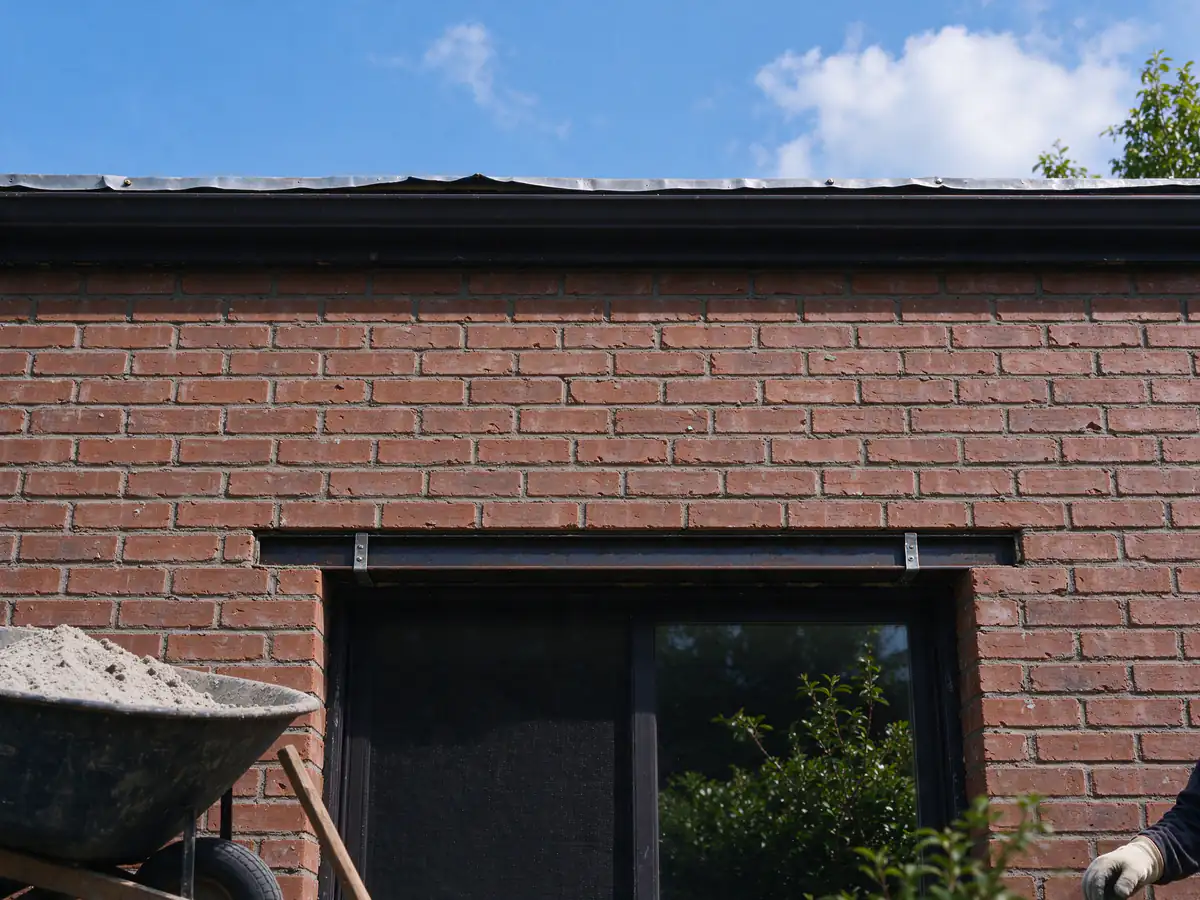
Representative photos of this type of work, not photos of specific completed jobs.