
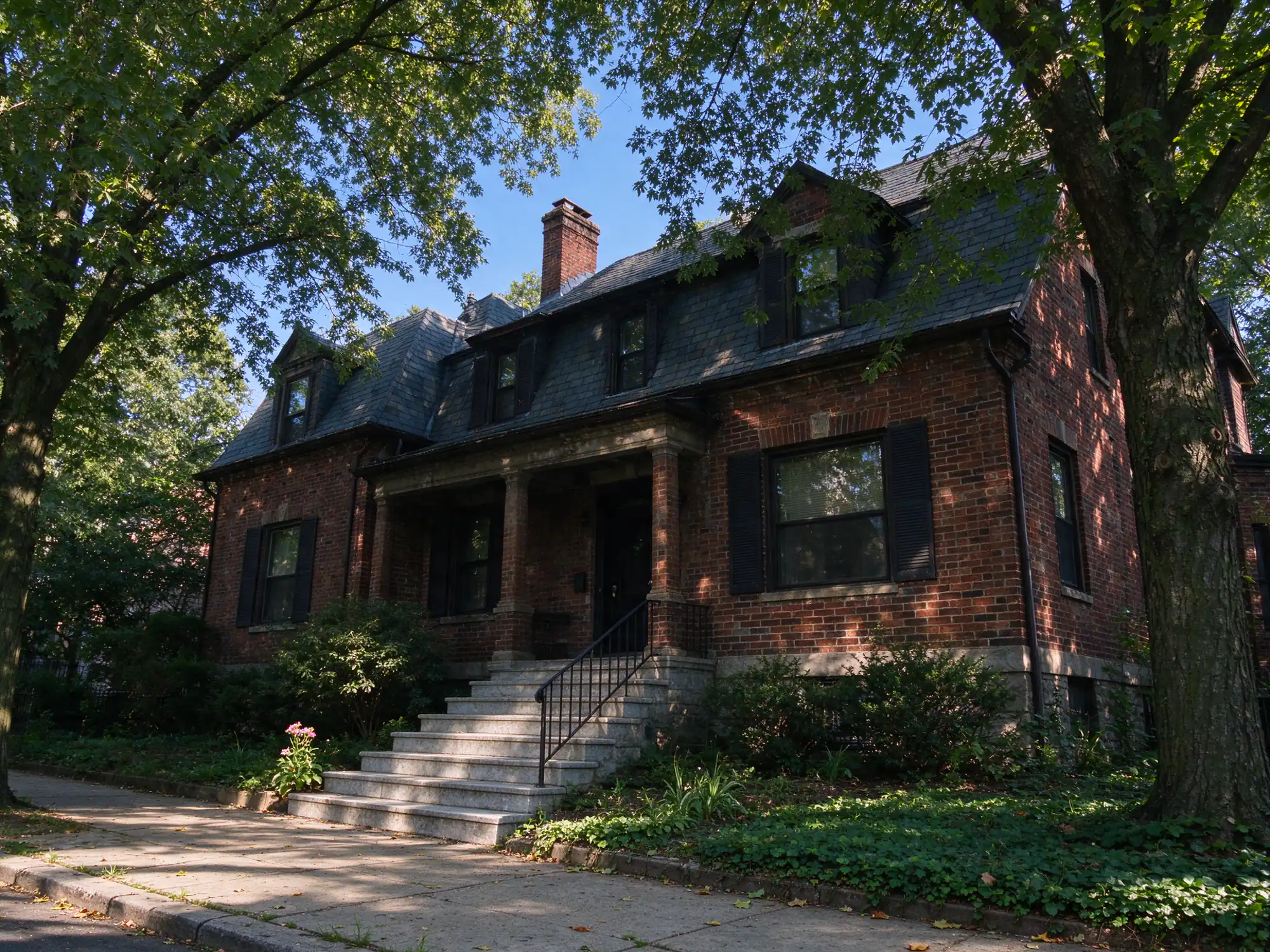
True Course Masonry Newark repairs brick walls, chimneys, stone steps and trim on Glen Ridge houses, with the work carried out by licensed and insured contractors. Hiring a masonry contractor in Glen Ridge, NJ means planning around the borough’s Historic Preservation Commission, which may review street-visible work and expects the brick and mortar match to be settled before an application goes in. The business takes jobs of every size, from a few replacement bricks to repointing a full front.
A borough built before 1940
U.S. Census Bureau American Community Survey estimates for 2020 to 2024 count 2,569 housing units in Glen Ridge, and 81.1% of them were built in 1939 or earlier, the highest share of any Essex County town this site covers. By 1960 the figure reaches 86.0%. The borough is also almost entirely single houses: 85.5% of units are one-unit detached. Many of those homes sit within the Glen Ridge Historic District, listed on the National Register of Historic Places in 1982 and expanded twice since.
The survey does not record wall material, so it cannot say which houses are brick. Where a house is brick or has brick and stone details, though, its joints were laid with the mortar of their day, and many decades of weather separate that work from today. NOAA’s 1991 to 2020 normals for Newark Liberty Airport show about 65 days a year that cross the freezing mark, a proxy rather than a measured count, and 46.60 inches of annual precipitation. Chimneys, front steps and the tops of garden walls take the most of it.
What the Glen Ridge commission looks at
The Glen Ridge Historic Preservation Commission reviews exterior changes that require a building permit and can be seen from any street. The two tests work together: interior work and work hidden from every street fall outside it, while a permitted change to a street-visible wall comes before the commission. Applications are due 20 days before the monthly meeting on the first Wednesday, and the borough’s Historic Design Guidelines include a chapter on masonry. In June 2025 the commission required an addition’s brick to match the existing house, with matching mortar.
For a repair, that record points to one thing: the match has to be shown, not promised. A scope that names the brick to be used, the mortar color and sand, and the joint profile, with a cured trial area where possible, gives the commission something concrete to approve.
Matching brick and mortar on a Glen Ridge house
Mortar color comes mostly from the sand and the binder, and new joints read brighter than old ones until they weather. The guide to matching mortar and brick explains how a mix is tuned to an existing wall. On older brick, the new mortar is chosen to suit the brick rather than the hardest mix available, because a joint harder than the brick can push wear into the brick faces.
Joint profile matters as much as color. A joint that was struck flush, raked or tooled to a concave curve casts a different shadow, and widening joints with a grinder changes the look of the whole wall. Proper repointing cuts failed mortar out to a sound depth and repacks it in layers; the guide to tuckpointing versus repointing explains the difference.
Coatings are the third trap. A clear sealer can change how brick looks and how it dries, and brick is not waterproof in any case, so the guide to whether to seal brick is worth reading before anyone proposes one.
How a Glen Ridge job usually runs
A first look checks the wall type, joint depth, brick and stone condition, earlier repairs, water sources, movement clues and access. Prices follow that visit, and a written scope names each area and the access needed.
Permits are issued by Glen Ridge’s own construction office. Under N.J.A.C. 5:23-2.14 a repair or reconstruction needs a permit unless an exception applies, and the state ordinary-maintenance list has no repointing item. Where a permit is needed and the work is street-visible, the commission’s application is prepared alongside it, so the meeting date sets the calendar. Timing then becomes a seasonal question. Mortar needs days above freezing to cure, and NOAA puts the median first fall freeze at Newark on November 10. A job that needs commission approval and is ready to file in September has a realistic chance of finishing before cold weather, while one filed in late October may be better scheduled for spring; the guide to masonry work in cold weather explains what protection late-season work needs.
During the work, surfaces are protected, failed material comes out to sound limits with dust control, and a trial area is laid where color matters. The finished work is cured, cleaned up and walked through. New Jersey law requires any home improvement contract over $500 to be in writing with the contractor’s registration number and insurance certificate, and the guide to hiring a masonry contractor in New Jersey lists what else to check.
Services for Glen Ridge houses
Historic masonry restoration suits street-facing work where matching drives the scope. Brick pointing renews failed joints, and the brick pointing cost guide explains what moves the price. Chimney repair covers repointing and crown work, but not flue liners or sweeping. Brick repair replaces damaged units, and stoop repair covers brick and stone steps, where the support under the treads is checked before any joint is touched, since repointing a step that has settled does not stop it moving.
Nearby pages cover Montclair, Bloomfield and Belleville.