Last Updated:
Brick repair in Newark, NJ covers the bricks themselves: faces that have spalled away, units cracked through, and bricks that have worked loose in their joints. True Course Masonry Newark replaces and resets damaged brick across Newark and Essex County, from a single blown brick under a sill to a damaged corner, a garden wall or a pier. The work is carried out by licensed and insured contractors, and small repairs are taken as readily as large ones. A damaged brick is sometimes the whole problem and sometimes only the evidence. Replacing it without asking why it failed is how the same spot comes back in a few winters, so the first question is always what damaged the brick: water, hard mortar, rusting steel, movement or the brick itself. If the joints are the issue rather than the units, brick pointing is the better starting point.
What happens on the first visit
A first look at damaged brick checks the cause as carefully as the count. It looks at:
- Which bricks are damaged and how. Faces popped off, cracks through the unit, crumbling edges or bricks that move in their joints, and whether the damage is isolated or clustered.
- Why they failed. Water concentrating from a gutter, sill or cap, hard gray repair mortar around soft brick, rust staining near a lintel, or cracks that suggest the wall has moved.
- The wall type. Whether the brick is a veneer with weeps along its base, a solid wall with header courses, or a garden wall or pier standing on its own.
- The bond and coursing. The pattern, course heights and joint profile the repair has to follow.
- The brick. Its size, color range, texture and how hard it is, so replacements can be sourced, and whether it is clay or concrete brick.
- Access. Height, ladder or scaffold needs and how close the neighboring house is.
Damage over a window or door belongs to a different repair; the guide to cracks above windows in brick explains why.
Spalled, cracked and loose brick
Spalled brick and replacement
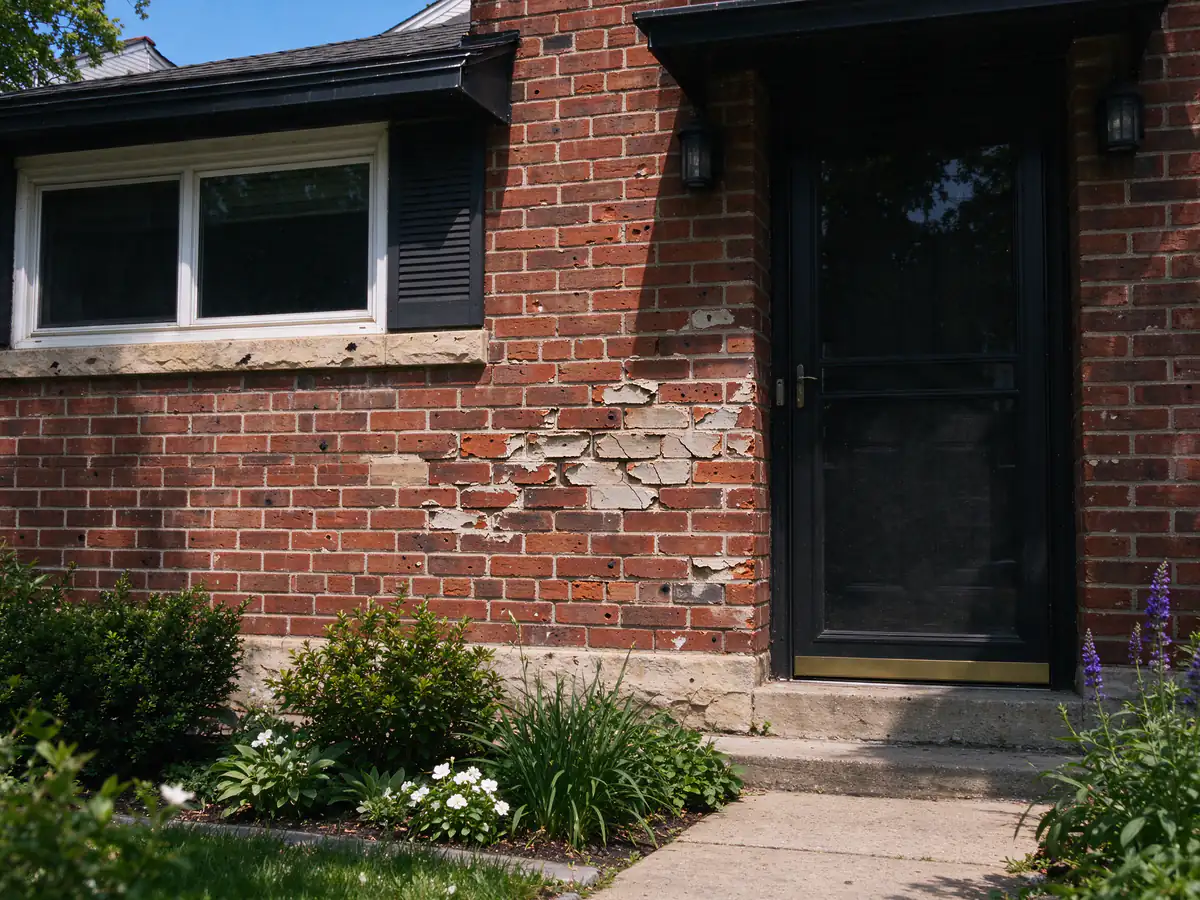
Spalling is the face of a brick breaking away, sometimes in thin flakes, sometimes as a whole face popping off. It usually means water got into the brick and could not get out fast enough: it froze, or salts carried by the water crystallized just behind the face. NOAA’s normals for Newark Liberty International Airport show about 80 nights a year at or below freezing, with about 65 days warming back above 32 degrees F in the afternoon, which gives a wet brick plenty of chances to break. Hard cement mortar around soft old brick makes it worse, because water leaves through the brick instead of the joint; the guide to lime mortar vs portland cement explains that relationship. The guide to why brick spalls explains these causes in depth.
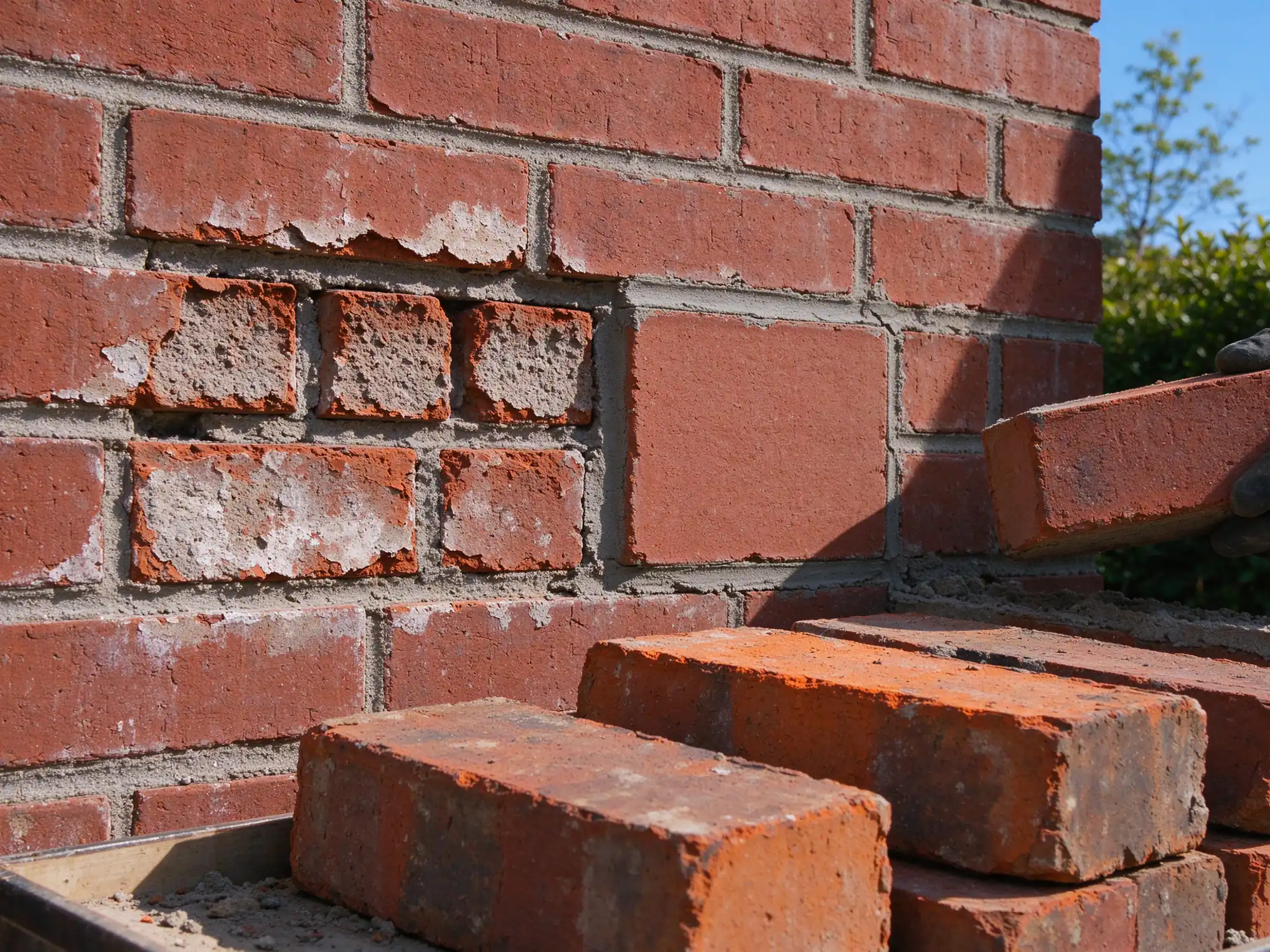
A spalled brick is cut out by removing the mortar around it, then breaking out the unit without disturbing its neighbors. The cavity is cleaned, a matched brick is buttered and set in fresh mortar, and the joints are tooled to the existing profile. Turning the old brick around to show its back face is sometimes suggested; it can work on soft brick that is otherwise sound, but the inner face was never fired or weathered as a face, and it may not last.
Cracked vs spalled brick
A cracked brick has split through rather than losing its face. A crack confined to one unit can come from impact or a flaw in the brick, but cracks that line up through several units mean the wall moved and the brick, not the mortar, gave way. That is a movement question first, and replacing the cracked units without finding the cause leaves new cracks waiting to form. The masonry repair page explains how cracks are read before a repair is chosen.
Resetting loose brick
A brick that is whole but loose usually has failed mortar around it, often at a wall cap, a step or the top of a pier where water sits. Resetting means removing the unit, cleaning the old mortar off the brick and out of the opening, and setting the same brick back in fresh mortar. It keeps the original brick, which avoids matching problems entirely. Loose brick overhead is a falling hazard, so please do not pull on it or stand under it; mention it when you get in touch.
Matching replacement brick
Size, color, texture and hardness
A brick that looks close enough in a photo can stand out on the wall. Size matters first: older brick and modern brick often differ in height, so a modern unit can throw off the course lines. Color comes next, judged against weathered brick in daylight rather than a fresh sample. Texture, from smooth to sand-struck to wire-cut, changes how the face catches light. Hardness and absorption matter most for durability: a much harder, denser brick next to soft old brick handles water differently, and the soft units around it can start to fail. Homeowners report replacement brick that never blended in after a repair. Staining can help, but it is a surface treatment with its own maintenance. The guide to matching mortar and brick covers how a match is tested.
Salvaged brick
Salvaged brick is often the closest match because it came from the same era or the same wall. Brick taken from a hidden area of the house, or from a section being rebuilt, is ideal. Salvaged units from other buildings vary, so they are checked for cracks, cleaned and compared for hardness before use.
Clay vs concrete brick
Most older brick is fired clay. Concrete brick exists and can look similar, but it is a different material: concrete masonry tends to shrink as it dries while clay brick tends to expand slightly over time, and the Brick Industry Association’s technical guidance is written for fired clay brick and does not carry over automatically to concrete units. Mixing the two in one wall can cause cracking at the edges and uneven weathering, so a repair usually stays with the material already there. Walls built of concrete block rather than brick are covered under block wall repair.
Toothing new brick into old courses
Brick repair is not only swapping units; it is keeping the wall one piece. Where a larger area is replaced, the new brick is toothed into the existing courses: the edges of the repair are stepped so that new units overlap old ones course by course instead of meeting at a straight vertical seam. A straight seam is a weak line and shows from the street. Course heights are carried through so the bed joints line up across the repair.
The bond pattern has to match too. Running bond, with every brick a stretcher offset by half a unit, is the plainest. Common bond adds a row of headers, bricks turned end-out, every few courses; in solid walls those headers reach into the wythe behind and help tie the layers together. Flemish bond alternates headers and stretchers in each course. Where a wall has structural headers, a repair that replaces them with half bricks for looks removes some of that tie, so the scope should say how headers are handled. The repair mortar is chosen for the brick: softer than the units so the joint, not the brick, takes the stress.
Expansion joints and weeps
Expansion joints in brick
Clay brick expands slightly over its life as it takes on moisture, and it grows and shrinks with temperature. In a long wall, that movement needs somewhere to go. Expansion joints are vertical gaps, usually near corners, at offsets and along long runs, filled with a flexible sealant over a backer rod rather than mortar. When a wall has no joints, or someone has filled them with mortar, the brick pushes against itself and cracks, often vertically near a corner. Expansion joints are never filled with mortar. A failed sealant is cut out and replaced with sealant, and cracking caused by missing joints may call for a joint to be cut in.
Weeps in veneer walls
Where a house has brick veneer, some rain passes through the brick and runs down the drainage space behind it to flashing at the base and over openings. Weeps, open head joints or small vents in the course just above the flashing, let that water out. They are never plugged. Weeps filled with mortar or caulk trap water against the ties and framing, which can rust ties and rot the backup. Published data does not show how many Newark houses are veneer rather than solid masonry, so the first look confirms which kind of wall it is. The older brick home masonry guide explains how the two wall types differ.
Brick veneer repair
On veneer, replacing face brick is often where the job starts, not where it ends. Removing a damaged area exposes the ties, the flashing and the drainage space behind it, and corroded ties or missing flashing should be dealt with while the wall is open. A veneer that bulges away from its backup is a different repair; the guide to bulging brick walls explains why ties are usually the issue. Where steel over an opening is rusting, see steel lintel replacement.
Piers, columns and garden walls
Freestanding brick takes weather from every side and the top. Garden walls, entry piers, mailbox columns and brick columns on porches tend to fail from the cap down: water gets in through a cracked or flat cap, saturates the brick and freezes. The repair often combines resetting loose brick, replacing spalled units, repointing and rebuilding the cap so it sheds water with a drip edge. A pier that leans, or a porch column carrying a roof, raises the question of what is under it before the brick is relaid. Steps and stoops have their own page: stoop repair. A brand new garden wall or pier is brick wall construction, and brick on a chimney stack belongs with chimney masonry repair.
Permits and historic fronts
New Jersey’s construction code requires a permit before repair work unless an exception applies (N.J.A.C. 5:23-2.14), and the ordinary maintenance list does not name masonry repair, so check with the Newark construction office before work starts. The guide to masonry permits in Newark covers what to ask. Street-facing work in a Newark historic district can need Landmarks and Historic Preservation Commission review, and brick matching is exactly what a review looks at; historic masonry restoration covers that work.
What brick repair costs in the Newark area
For small jobs, Homewyse’s estimator for Newark ZIP 07102 puts a one-brick repair at about $211 to $276 and roughly 10 bricks at about $530 to $660, because setup and minimum labor dominate small jobs. Replacing damaged veneer brick typically runs about $10 to $24 per square foot in national guides from HomeGuide and Fixr, before any flashing or wall-tie work behind it. These are budgeting ranges for Newark-area projects, not our rates or a quote. Matching old brick, height and access move the number, along with:
- how scattered the damaged units are across the wall
- sourcing matched or salvaged brick, and any staining
- toothing a larger repair into the courses and bond
- ties, flashing or rusted steel found behind the face
- scaffold, sidewalk protection and neighboring access
The brick repair cost guide works through these drivers, and the masonry cost estimator gives a rough range for your own wall. The list below shows what a brick repair scope from True Course Masonry Newark covers.
What's included
- A first look at the damaged bricks, the wall type, the bond pattern, earlier repairs and the likely source of the damage
- A written scope that names each repair area, the approximate number of units and whether they are reset, replaced or rebuilt
- Sourcing of replacement brick matched for size, color, texture and hardness, or salvaged brick where it suits
- Protection for windows, sills, plantings, paving and neighboring property next to the work
- Careful removal of damaged units and the mortar around them without breaking sound brick nearby
- Units set in a mortar matched to the wall, toothed into the courses and tooled to the existing joint profile
- Curing protection, cleanup of residue with a method suited to the brick, and a final walk of the repaired areas
Resetting, replacing and rebuilding damaged brick
| Reset the brick | Replace the brick | Rebuild the section | |
|---|---|---|---|
| When it fits | The brick is whole but loose, usually because the mortar around it failed | The face has spalled off, or the brick is cracked through | Many units are loose or damaged together, or the area has moved out of plane |
| What happens | The unit comes out, old mortar is cleaned off, and it goes back in fresh mortar | The damaged unit is cut out and a matched new or salvaged brick goes in | The area is taken down to sound brick and relaid in the original bond |
| Matching | Easiest: the original brick goes back in | Needs a match for size, color, texture and hardness | Original brick reused where sound, topped up with matched units |
| Watch for | Why the mortar failed in that spot | Why the face came off, or new units fail the same way | What moved the section; a rebuild that ignores the cause moves again |
Related resources
- LearnWhy Is My Brick Spalling?
- LearnCan New Mortar and Brick Match an Old Wall?
- LearnWhy Is Brick Cracking Above My Windows?
- Cost GuideHow Much Does Brick Repair Cost in NJ?
Representative photos of this work
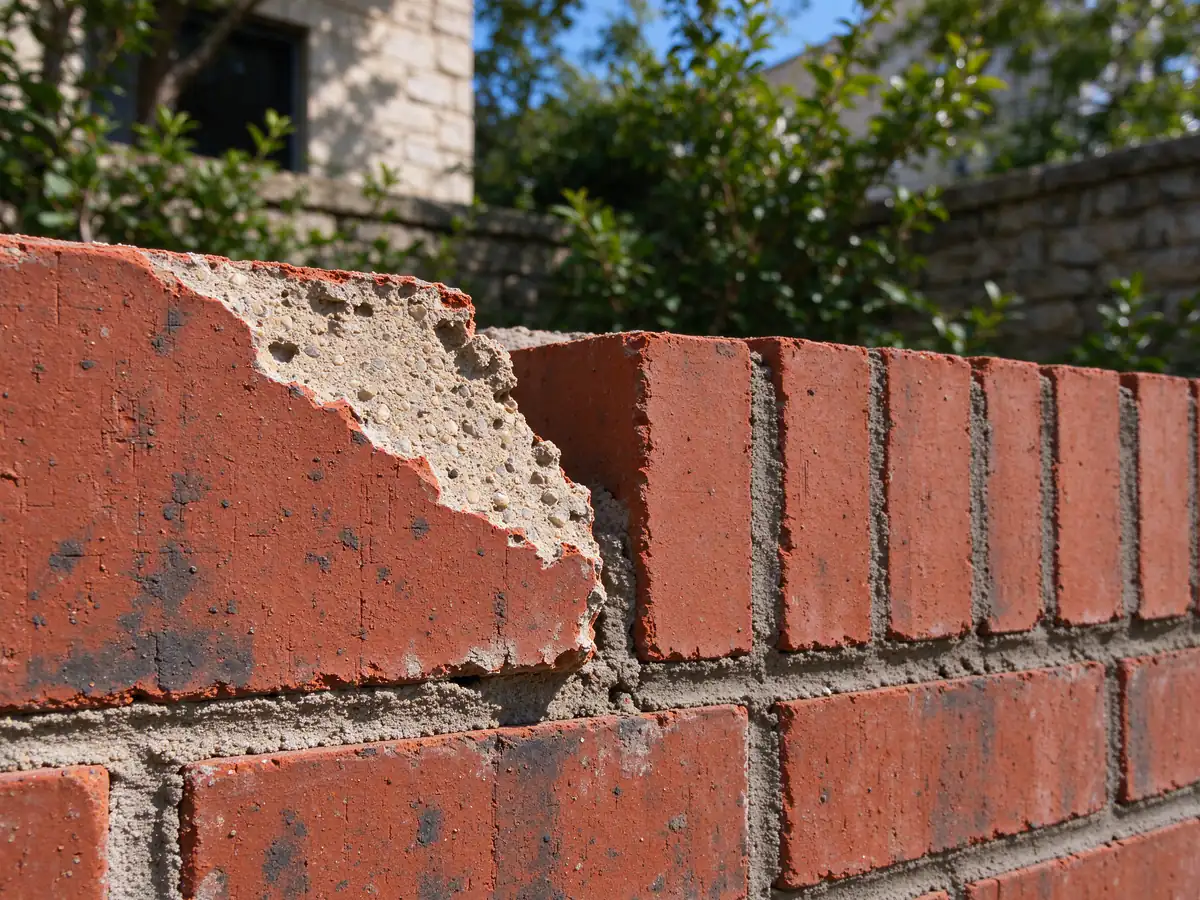
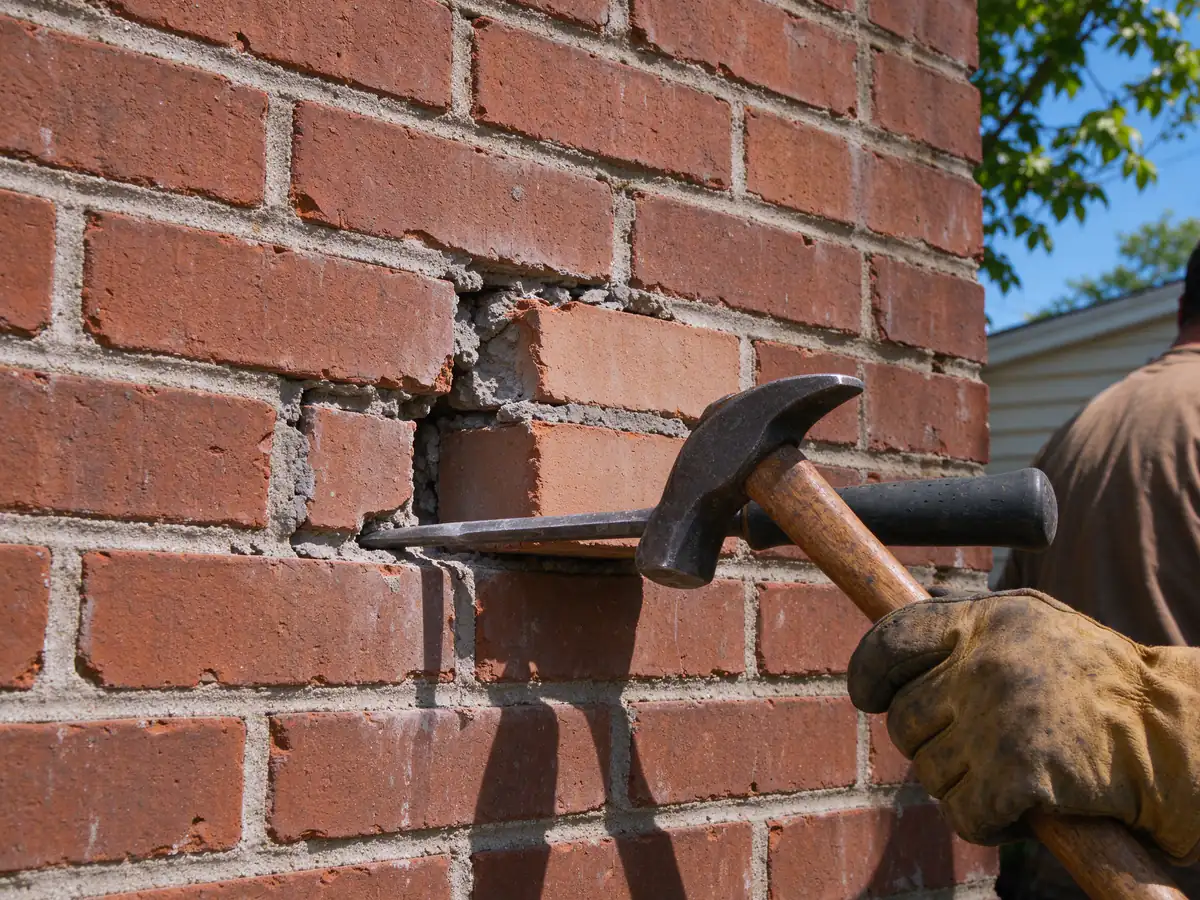
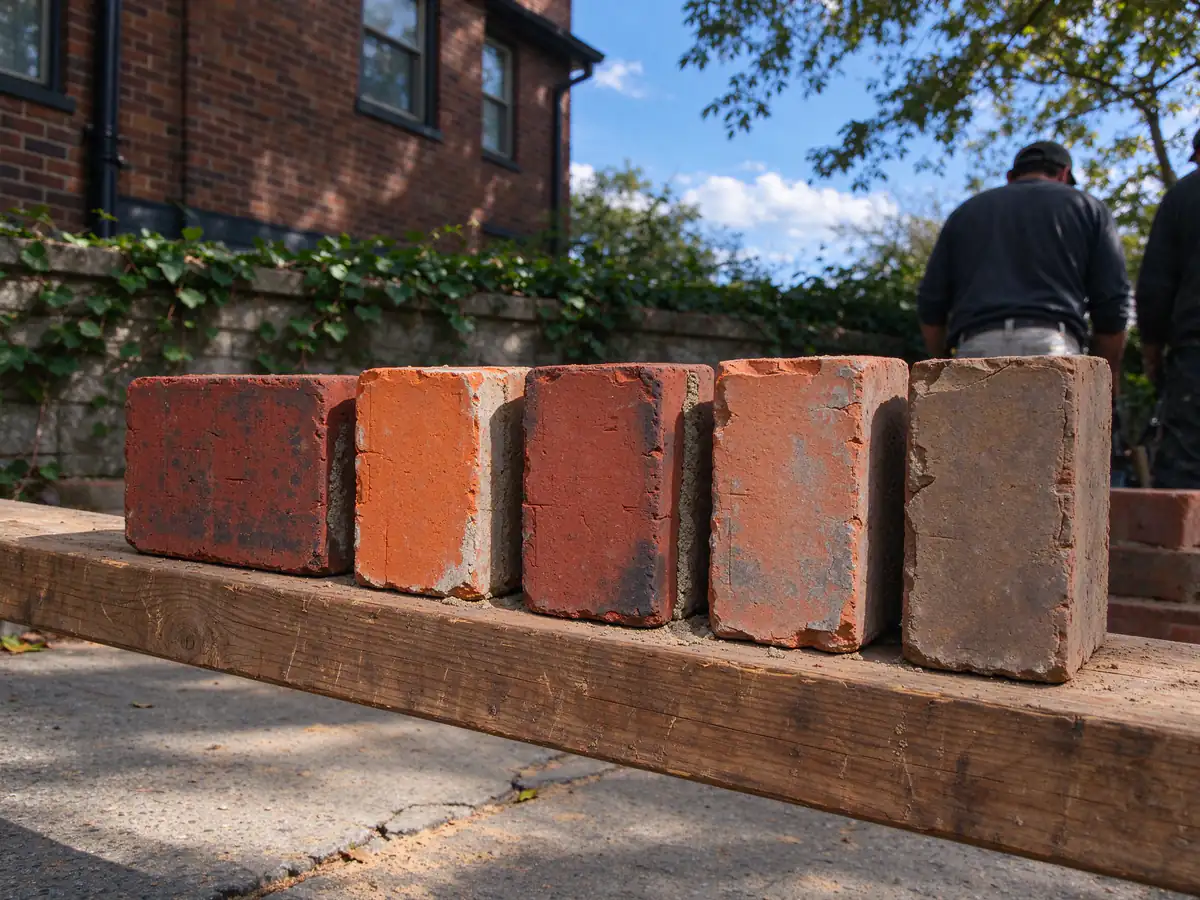
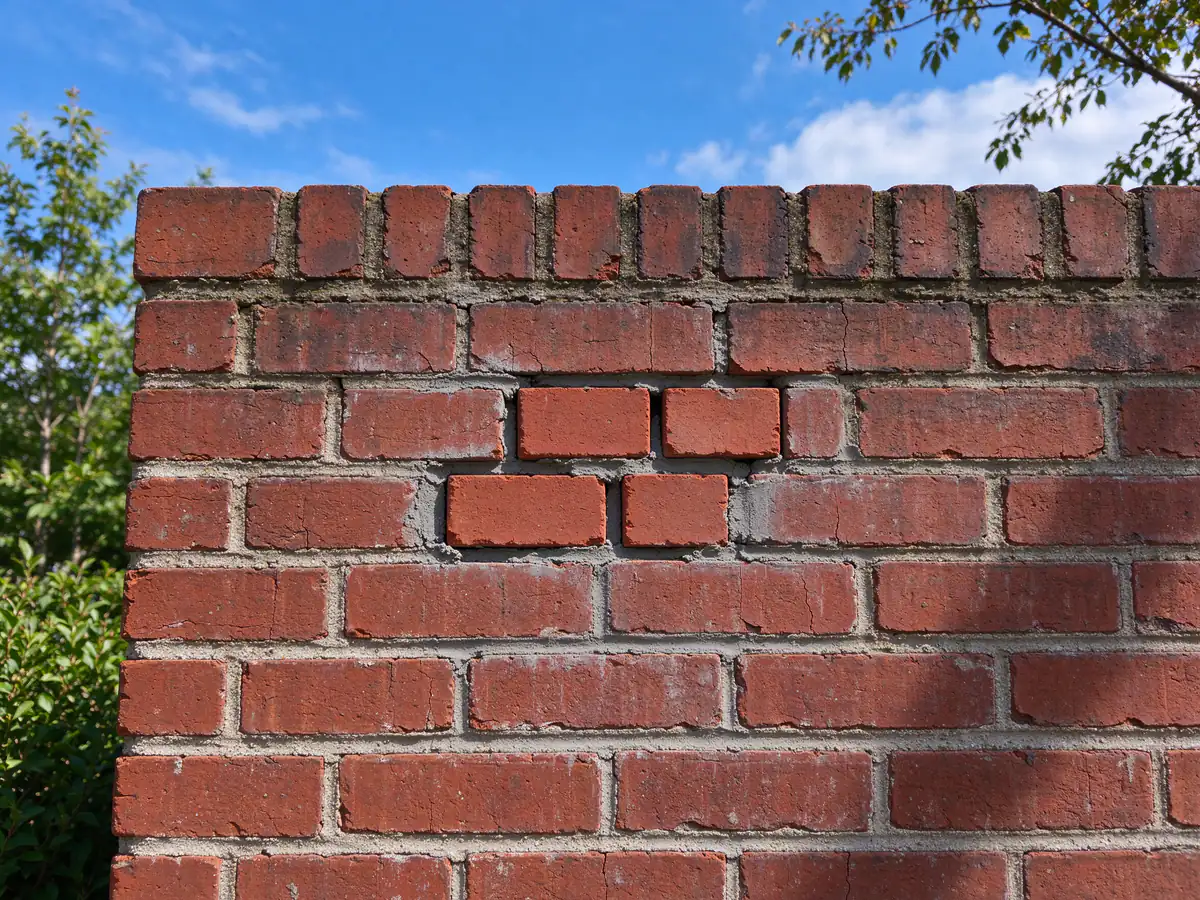
Representative photos of this type of work, not photos of specific completed jobs.
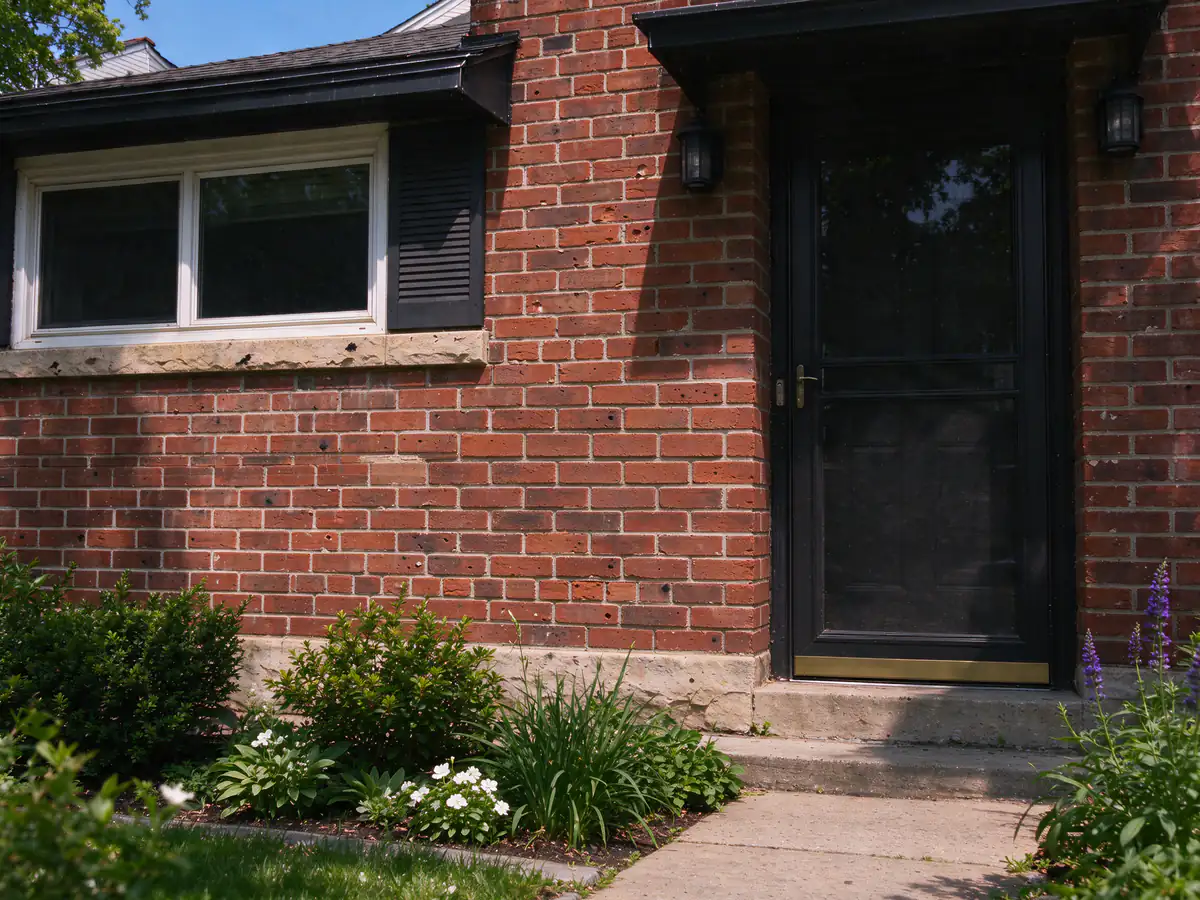
Before and after (representative)